

Kshs.1,000 Today Vs Tommorrow
Ksh. 1,000 Today vs. Tomorrow: Understanding Inflation and Why It’s Your Money’s Worst Enemy 🤑
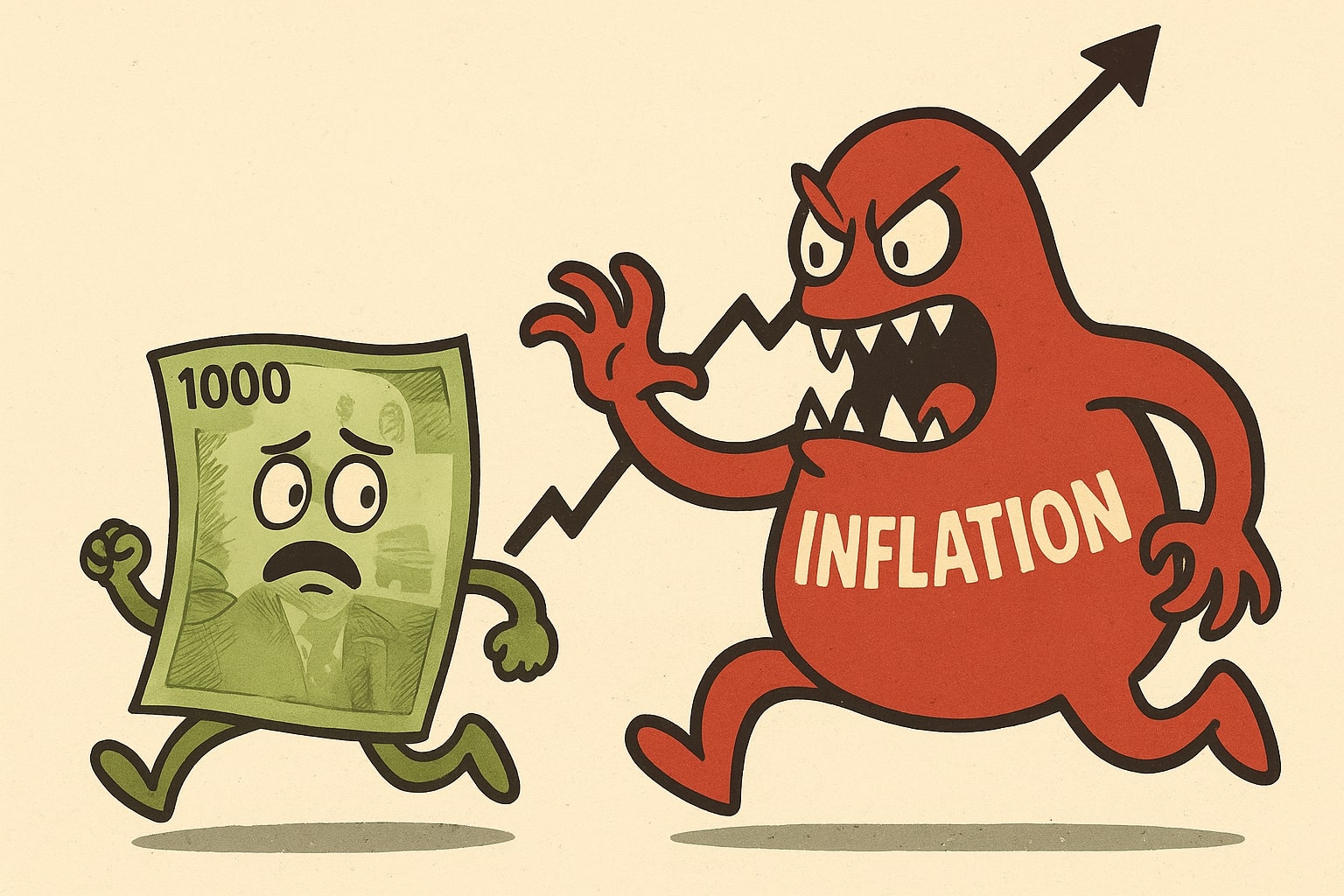
Let’s be honest — every Kenyan youth knows the heartbreak of watching their M-Pesa balance vanish faster than a hot mandazi on a cold morning. You get paid on the 1st, and by the 15th, your account is already on “zero chills.” 😩
Part of the mystery lies in one sneaky concept that silently eats your money while you sleep: Inflation. It’s not just a term for economists or old men arguing on TV — it’s the invisible monster that slowly steals the value of your hard-earned shillings.
What Exactly Is Inflation? (The Pocket Money Analogy)
Imagine this: Last year, your favourite mama mboga sold you five tomatoes for 50 bob. This year, you go back with the same 50 bob, and she hands you only three — with that “it’s not me, it’s the economy” look. 😅
That’s inflation — the general rise in prices of goods and services over time. Simply put, your money starts losing its purchasing power. In other words, Ksh. 1,000 today will buy you less tomorrow.
- Last Year: Ksh. 1,000 bought you 10 items.
- This Year: Ksh. 1,000 only buys you 8 of the same items.
Economists track this using something called the Consumer Price Index (CPI), which monitors how the prices of a “basket” of everyday goods — from unga and rent to fuel and Wi-Fi — change over time. As of September 2025, Kenya’s annual inflation rate stood at around 4.6%. That means, on average, things now cost 4.6% more than they did a year ago.
Why Is This Happening in Kenya?
Inflation doesn’t have one villain — it’s a complex mix of local and global factors. Think of it like a pot of githeri: too many ingredients, but one wrong mix and the whole thing changes.
- The Dollar Effect (Exchange Rate Drama): When the Kenyan Shilling weakens against the US Dollar (as it often does), imported goods — from fuel to spare parts — become more expensive. Businesses then raise prices to recover their costs. That’s called cost-push inflation.
- Unpredictable Weather: Droughts or floods affect crops. Less maize, beans or vegetables means food prices shoot up. Since food makes up a large part of Kenyan household expenses, it hits everyone hard.
- Fuel & Taxes: Every time fuel prices rise or VAT increases, transportation costs spike — from matatus to delivery trucks. Guess who ends up paying for that? You do.
- Global Events: Wars, pandemics or shipping delays can raise prices for goods even before they reach Mombasa Port. Kenya’s economy doesn’t exist in a vacuum.
The Real Pain: How Inflation Hits You
For many Kenyan youths — whether you’re employed, freelancing, or running your own biz — inflation is more than a headline. It’s a daily reality that shrinks your lifestyle and savings.
1. Your Savings Are Shrinking 📉
If you save Ksh. 10,000 in your bank account and inflation is 4.6%, that money will only have the buying power of Ksh. 9,540 next year. In short: your savings are losing value while you sleep.
2. The Job Market Pressure Cooker 🔥
When inflation rises, the Central Bank often increases interest rates to stabilize prices. That sounds great on paper — until you realize higher interest rates make loans more expensive for businesses. This slows hiring, freezes promotions and can make it harder for startups to access funding.
3. The Lifestyle Squeeze 😤
Inflation forces tough choices. Many households start juggling expenses like circus performers:
- Transport vs. Food: Rising fuel prices mean higher matatu fares, leaving less for ugali and sukuma.
- School Fees vs. Rent: For parents and students, even small price jumps can create painful trade-offs.
- Data or Dine Out? You might skip a hangout to afford your Safaricom bundles. (Relatable, right?)
How to Fight Back: Your Anti-Inflation Toolkit 🛡️
You can’t control global oil prices or government taxes, but you can control how you respond. Here’s your smart Kenyan survival guide:
✅ 1. Skill Up, Earn More
Inflation hits hardest when income stays stagnant. Beat it by raising your earning power. Learn new, high-demand skills — from digital marketing to coding, photography, or trades like plumbing and electricals. When the economy shifts, the skilled adapt faster and earn more.
✅ 2. Don’t Just Save — INVEST!
Leaving all your cash in a regular bank account is like hiding it under your mattress — it feels safe, but it’s shrinking in value. Let your money grow faster than inflation by exploring these:
- Money Market Funds (MMFs): Low-risk, flexible investments that often beat inflation rates. Start with as little as Ksh. 1,000.
- Treasury Bills & Bonds: Government-backed and stable — a great option for medium- or long-term savers.
- Real Estate or Growth Stocks: Higher risk but potentially higher returns that preserve value over time.
✅ 3. Budget Like a Pro
Inflation thrives on financial chaos. The less you track your money, the easier it slips away. Use apps like Spendee, Mint, or a simple Google Sheet to record every coin.
When you know where your Ksh. 1,000 is going — from snacks to subscriptions — you can make intentional decisions and redirect wasteful spending into investments.
The Big Picture: Inflation Isn’t Your Enemy — Ignorance Is
Inflation will always exist, but it doesn’t have to defeat you. Once you understand it, you can plan around it — negotiate better salaries, invest wisely and live smarter.
Remember: Wealth isn’t about how much you earn — it’s about how much your money keeps its value. So, start building habits that protect your financial future. Learn, invest and grow faster than inflation can catch you.